
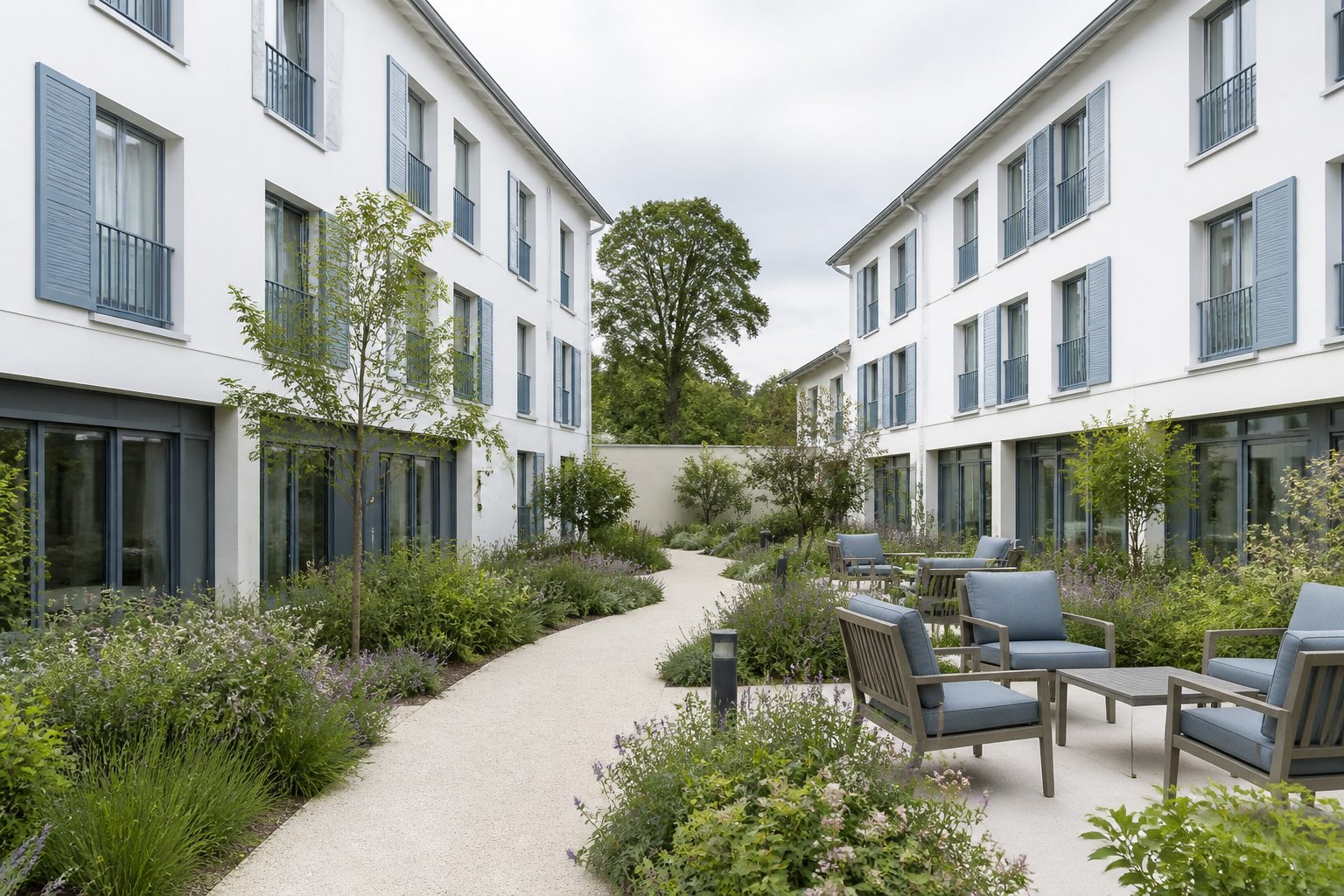
Assisted living for couples in France generally costs between $3,500 and $7,000 (about €3,200–€6,400) per month. This range includes accommodation, daily meals, basic care, and access to communal facilities, but the final price depends on the city, level of care, and services chosen.
This guide is for couples—whether both partners need assistance, or only one—considering assisted living, rehabilitation, or elderly care in France. It covers typical monthly fees, what’s included, and how France compares with other countries for physiotherapy, home healthcare, and nursing support.
Understanding assisted living for couples in France
Assisted living in France is available through two main types of residences: “résidences services seniors” (non-medical, independent living with support) and “EHPAD” (Établissement d’Hébergement pour Personnes Âgées Dépendantes), which provide medicalised care for seniors with greater needs. Couples can typically live together in a private apartment or a larger room, designed to maintain as much independence and privacy as possible while still offering support. Facilities are staffed to assist with daily activities such as bathing, dressing, and mobility, and can increase care levels as needs change.
For couples, the monthly fee structure reflects not only the size of the accommodation but also the dual nature of care. Most facilities assess each partner’s care requirements separately, which can influence the total cost. For example, if one partner needs only light assistance while the other requires daily nursing care, the fee will be adjusted accordingly. In regions such as Paris, Lyon, or along the Côte d’Azur, expect higher baseline fees due to real estate costs and demand. In contrast, rural or less affluent areas may offer more affordable options, though availability may be limited and waiting lists longer.
Facilities can be public (state-subsidised), non-profit, or private. Public and non-profit homes often have lower fees but stricter eligibility criteria, while private residences may offer more amenities and flexibility at a higher price. Some facilities offer special packages for couples, including discounts for shared accommodation or tailored services for partners with different care levels. Others may charge each resident individually, with an added supplement for a larger shared room or apartment. It is important to compare contracts and fee structures carefully.
Ultimately, assisted living for couples in France is designed to promote autonomy, dignity, and quality of life, with options to suit a wide range of needs and budgets. Early research and direct communication with facilities will help clarify what’s available in your preferred region and what you can expect to pay.
What’s included and what’s extra
French assisted living facilities, whether in urban centers like Paris or more rural regions, typically offer a comprehensive base package in their monthly fees. For couples, this usually means a private or shared apartment or room designed to accommodate two people. The standard fee almost always includes three nutritionally balanced daily meals and snacks, often prepared on-site, with accommodations for basic dietary needs. Housekeeping and laundry services are part of the package, ensuring linens and personal clothing are regularly cleaned and apartments are maintained.
- Private or shared apartment/room for two, with utilities and basic furnishings included
- Three daily meals and snacks, with menu variations and occasional themed meals
- Housekeeping and laundry for personal items and linens
- Basic nursing care, such as medication management, routine health monitoring, and assistance with daily living activities like bathing or dressing
- 24-hour emergency call system, with staff on-site at all times
- Access to communal spaces, gardens, and a calendar of social, cultural, and recreational activities
- Some on-site physiotherapy and rehabilitation support, generally limited to group sessions or periodic assessments
However, there are several services that most facilities consider extra and bill separately. These can significantly impact your monthly costs, especially if one or both partners require higher levels of care or wish to enjoy additional amenities.
- Specialised medical or dementia care, including secure memory care units or tailored supervision
- Personalised physiotherapy sessions beyond the standard offerings
- Extra meals for visitors, guests, or special dietary plans such as diabetic or gluten-free menus
- Transport to external appointments, such as hospital visits or specialist consultations outside the facility
- Beauty and wellness services, including hairdressing, podiatry, massage, or spa treatments
- Private nursing or palliative care, which may be necessary for residents with advanced medical needs
It is essential to request a detailed breakdown of what is included in your quoted monthly fee and to clarify the cost structure for any optional or extra services. In France, regulations require transparency in billing, so do not hesitate to ask for written documentation. Some facilities may also offer bundled packages for couples, which can help manage costs if both partners need different levels of support.
Monthly costs: France compared to other countries
Assisted living and elderly care pricing varies widely across countries. In France, high regulatory standards and staff-to-resident ratios mean costs are higher than in some neighboring countries, but lower than in the US or UK. Below is a comparison of typical monthly fees for couples in assisted living or equivalent care settings, including basic physiotherapy and daily support. All figures are indicative and can vary significantly by region and facility.
| Country | Monthly fee (couple) | Currency | Typical inclusions |
|---|---|---|---|
| France | $3,500–$7,000 | €3,200–€6,400 | Accommodation, meals, basic care, some rehab |
| Germany | $3,000–$6,000 | €2,700–€5,400 | Accommodation, meals, basic care, some rehab |
| Italy | $2,800–$5,500 | €2,500–€5,000 | Accommodation, meals, basic care |
| Spain | $2,500–$5,000 | €2,200–€4,500 | Accommodation, meals, basic care |
| United Kingdom | $5,000–$9,000 | £4,000–£7,200 | Accommodation, meals, nursing, some rehab |
| United States | $7,000–$15,000 | USD | Accommodation, meals, nursing, rehab |
| India | $1,200–$2,800 | ₹1–2.3 lakh | Accommodation, meals, basic care |
| Philippines | $1,000–$2,500 | ₱56,000–₱140,000 | Accommodation, meals, basic care |
| Indonesia | $900–$2,000 | Rp 14–31 million | Accommodation, meals, basic care |
| Bangladesh | $800–$1,800 | ৳90,000–৳200,000 | Accommodation, meals, basic care |
| Pakistan | $850–$1,900 | ₨240,000–₨540,000 | Accommodation, meals, basic care |
Physiotherapy and rehabilitation services
Most French assisted living residences include basic physiotherapy support in the monthly fee. This may involve group exercise classes, balance training, and fall prevention. For couples where one or both partners require more intensive rehabilitation—after a stroke, surgery, or due to chronic illness—additional physiotherapy sessions are available on-site or through external providers.
Individual physiotherapy sessions typically cost $45–$80 (€40–€75) per session in France. Some facilities have in-house physiotherapists; others arrange visits from local clinics. Rehabilitation hospitals in France offer comprehensive recovery programs, but these are usually charged separately from assisted living and may require referral or short-term admission.
Ask about the availability of English-speaking therapists, the frequency of sessions included, and whether your health insurance or French social security can reimburse part of the cost. For couples with complex mobility needs, prioritising a facility with strong rehabilitation support is advisable.
Home nursing and palliative care options
For couples who wish to remain in their own home rather than move to an assisted living facility, France offers a robust system of home-based care services. Home nursing, known as “soins infirmiers à domicile,” is available through both private agencies and public networks. These services typically include daily visits for medication administration, wound care, injections, and assistance with activities of daily living such as bathing, dressing, and mobility support. The cost for basic home nursing ranges from $25–$50 (€22–€45) per visit, with monthly packages from $1,200–$3,000 (€1,100–€2,700), depending on the frequency and complexity of care needed. Couples requiring more frequent or intensive support—such as those with chronic illnesses or significant mobility limitations—should expect higher costs, especially if night-time or weekend care is required.
Palliative care at home is coordinated by multidisciplinary teams, often including doctors, nurses, psychologists, and social workers. This service is partially or fully subsidised by the French state for patients who meet eligibility criteria, such as those with terminal illnesses or severe chronic conditions. Palliative care teams provide symptom management, pain relief, and emotional support for both patients and their families. For couples, it is important to clarify whether 24-hour or emergency support is included, as not all agencies offer round-the-clock services within the base fee.
Home physiotherapy can also be arranged, either privately or through the French healthcare system (Sécurité Sociale), and is usually billed at rates similar to outpatient clinic sessions. If you are considering home-based care, factor in the potential need for home modifications, such as installing grab bars, ramps, or stairlifts, to ensure safety and accessibility for both partners. Additionally, investigate the availability of local support services, such as meal delivery, cleaning, and respite care, which can help couples maintain their independence at home for longer. When comparing home care to assisted living, weigh not only the direct costs but also the emotional and social impacts of remaining in a familiar environment versus joining a supportive community.
Hidden costs and potential savings
While the headline monthly fee covers the essentials, couples should budget for additional costs. Common extras include personal hygiene products, special dietary supplements, outings, and private therapies. Some facilities charge fees for parking, guest meals, or high-speed internet. If one partner requires significantly more care, a surcharge may apply.
Potential savings come from choosing a non-profit or municipal residence, which may offer lower rates but have waiting lists. Couples with limited means may qualify for French state assistance (“APA” or “Allocation personnalisée d’autonomie”), which can offset care costs. If only one partner needs intensive care, some facilities allow the other to live independently at a reduced rate.
Prepaying for several months or negotiating bundled services (such as combined physiotherapy packages) can sometimes reduce costs. Always request a full written quote and ask about cancellation or deposit policies before signing a contract.
How to choose the right facility
Choosing the right assisted living facility for a couple in France involves balancing practical, medical, and emotional considerations. Begin by assessing the specific needs of both partners: does one require more assistance with mobility, memory care, or medical supervision? Make a list of must-have services, such as on-site nursing, rehabilitation, or dementia care, and consider preferences like proximity to family, urban vs. rural setting, and cultural or language offerings.
Arrange to visit several facilities in your target region. During visits, pay attention to room sizes, the adaptability of bathrooms and kitchens for limited mobility, and the availability of private versus shared spaces. Observe communal areas for cleanliness, comfort, and opportunities for social interaction. Ask about the staff-to-resident ratio—French regulations set minimum staffing levels, but higher ratios can mean more personalised care. Inquire whether staff members speak English or other languages if needed, especially for international couples or expatriates.
Check the availability of on-site medical services: is there a resident nurse or doctor, and how are emergencies handled? If one partner has dementia or complex medical needs, confirm the facility is properly equipped and licensed for specialised care, such as a dedicated Alzheimer’s unit. Ask about the frequency and scope of rehabilitation programs, and whether physiotherapists, occupational therapists, or psychologists are available.
For couples moving from abroad, look for facilities with experience supporting international residents. Ask for details on the admissions process, including required documents and timelines. Request to meet the care coordinator or social worker, and discuss how individualised care plans are developed, reviewed, and updated. Reviewing recent inspection reports (available through French health authorities) can provide insight into the facility’s quality and management. Finally, talk to current residents or their families if possible, to get a sense of daily life and satisfaction with care.
Planning your move: Practical steps
Moving into assisted living as a couple in France requires careful planning and coordination, ideally starting 6–12 months before your desired move date. Begin by researching facilities in your preferred region, keeping in mind that popular areas like Paris, Bordeaux, or the Côte d’Azur often have long waiting lists. Contact your top choices early to inquire about availability, application requirements, and whether they offer trial stays or short-term respite care to help couples adjust.
Gather all necessary documentation for both partners, including medical records, proof of identity (passports or national ID cards), financial statements, and any legal documents such as powers of attorney or advance directives. If you are applying from outside France, check the latest visa and residency requirements for seniors and confirm that your health insurance will cover care in France or arrange for supplemental coverage. You may need to have medical histories and legal documents officially translated into French.
Coordinate with the facility about move-in logistics. Ask what furnishings are provided and what personal items you can bring to make your new space feel like home. Discuss how medications will be managed, and whether you need to transfer prescriptions to a local pharmacy. If ongoing rehabilitation or specialist care is required, clarify how these services will be scheduled and who will provide them—some facilities have on-site therapists, while others work with external providers.
Stay in close contact with the admissions team, requesting regular updates on your application status and any additional information needed. If you have family or friends in France, consider enlisting their help for local arrangements, such as visiting facilities, setting up utilities, or assisting with the physical move. Finally, prepare emotionally for the transition by discussing your expectations and concerns as a couple, and consider joining support groups or online forums for expatriates and seniors in France.
Frequently asked questions
What is the average monthly fee for assisted living for couples in France?
Most couples pay between $3,500 and $7,000 (about €3,200–€6,400) per month, depending on the facility, region, and services included. Non-profit or municipal homes may be less expensive, but prices in Paris and the South of France are typically higher.
Are physiotherapy and rehabilitation included in the monthly fee?
Basic group physiotherapy is often included, but individual sessions or intensive rehabilitation usually cost extra ($45–$80 per session). Always ask for a full breakdown of included and optional services before committing.
Can couples with different care needs live together?
Yes, many facilities offer flexible arrangements for couples with differing levels of independence. However, if one partner requires much higher care, there may be an additional surcharge or the need for a more specialised residence.
Is financial assistance available to help cover the costs?
French residents may qualify for state support such as the Allocation personnalisée d’autonomie (APA), which can offset part of the monthly fee. Eligibility depends on age, residency, and care needs. Non-residents or expatriates may not qualify.
How far in advance should we apply for a place?
It’s advisable to begin your search and application process at least 6–12 months in advance, especially in high-demand areas. Waiting lists are common, and some facilities require medical assessments or interviews before admission.
Related guides
Disclaimer: Prices and service details are indicative and may vary depending on the facility, region, and personal care needs. Always request a detailed written quote and consult a qualified healthcare professional before making decisions about assisted living or elderly care.