
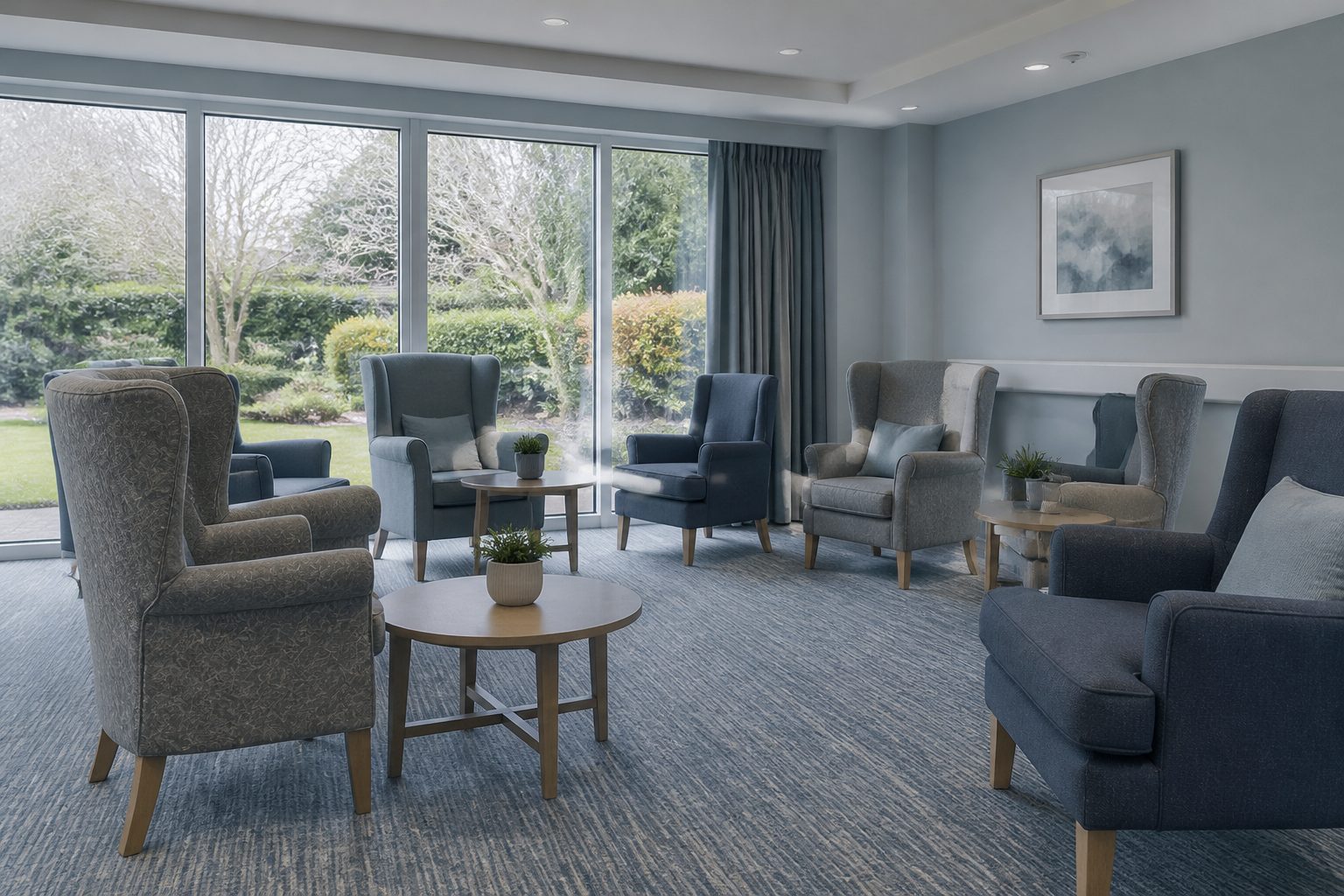
Private nursing home fees in the UK usually range from $4,000 to $7,000 (£3,200-£5,600) per month. Prices depend on the level of care, room type, and location, with additional charges for physiotherapy, rehabilitation, and specialist services.
This guide covers the full range of costs for private nursing homes in the UK, including what is included, what extra services cost, and how UK fees compare with other countries. It is for families and individuals planning elderly care, rehabilitation, or home healthcare, whether for short-term recovery or long-term support.
What private nursing home fees include
Private nursing homes in the UK offer a range of services, from basic room and board to advanced medical and therapy care. The standard monthly fee typically covers accommodation, meals, housekeeping, and basic personal care. For residents with greater needs, such as those requiring regular nursing, dementia support, or physiotherapy, costs rise accordingly.
In most cases, the base fee includes:
- A private or shared room
- Three daily meals and snacks
- Personal care (washing, dressing, help with mobility)
- Housekeeping and laundry
- Access to communal areas and activities
Additional services—such as physiotherapy, occupational therapy, speech therapy, and specialist nursing—are usually charged on top of the standard rate. End-of-life (palliative) care, if needed, can also increase costs. Always check exactly what is included in the quoted fee and request a list of optional extras.
Physiotherapy and rehabilitation in UK nursing homes
Physiotherapy and rehabilitation are vital components of holistic care in many UK nursing homes, particularly for residents recovering from surgery, strokes, falls, or managing chronic conditions like arthritis and Parkinson’s disease. The approach to rehabilitation varies between homes: some have dedicated on-site rehabilitation units staffed by physiotherapists, occupational therapists, and assistants, while others contract external therapists to visit as needed. The frequency and intensity of therapy are typically tailored to each resident’s needs, with individualised goal-setting and regular progress reviews.
Costs for physiotherapy in private UK nursing homes are usually not included in the standard care package and can add significantly to the monthly bill. Individual sessions generally range from £45 to £90 (about $55-$110), depending on the therapist’s qualifications, the complexity of the treatment, and session duration. For residents requiring intensive rehabilitation—such as after a hip replacement or major stroke—specialist programs can add £520-£1,050 ($650-$1,300) per week. This may include daily therapy, group classes, and use of specialist equipment like hydrotherapy pools or mobility aids.
It’s crucial to clarify with the nursing home whether any physiotherapy is included in the base fee, and if so, how many sessions per week are provided. Ask for a breakdown of additional charges for extra sessions, specialist assessments, or equipment hire. If NHS physiotherapy is available, check whether the home can facilitate access or if private provision is required. Always ensure that therapists are registered with the Health and Care Professions Council (HCPC) and have experience in geriatric or neurological rehabilitation if relevant. Being proactive in understanding and planning for these costs will help ensure that residents receive the support they need without unexpected financial strain.
Comparing costs: UK vs other countries
UK private nursing home fees are among the highest in Europe, but comparable to those in the US and Australia. In contrast, countries like India, the Philippines, and Indonesia offer much lower monthly costs, though standards and regulations can vary. The table below compares typical monthly fees for private nursing homes, plus per-session physiotherapy rates, in several major countries.
| Country | Monthly nursing home fee | Physiotherapy (per session) | Includes |
|---|---|---|---|
| UK | $4,000-$7,000 (£3,200-£5,600) | $55-$110 (£45-£90) | Room, meals, basic care, activities |
| US | $6,000-$12,000 | $90-$200 | Room, meals, basic care, activities |
| Australia | $3,800-$6,000 (A$5,800-A$9,200) | $60-$140 (A$90-A$210) | Room, meals, basic care, activities |
| India | $500-$1,500 (₹41,000-₹1.2 lakh) | $8-$20 (₹650-₹1,600) | Room, meals, basic care |
| Philippines | $600-$1,200 (₱34,000-₱68,000) | $10-$25 (₱570-₱1,400) | Room, meals, basic care |
| Indonesia | $400-$1,000 (Rp6-15 million) | $8-$18 (Rp130,000-300,000) | Room, meals, basic care |
| Germany | $3,000-$6,500 (€2,800-€6,000) | $50-$100 (€45-€90) | Room, meals, basic care, activities |
| France | $2,800-$5,800 (€2,600-€5,400) | $50-$95 (€45-€85) | Room, meals, basic care, activities |
Home nursing and assisted living fees
For those who prefer to remain at home, the UK offers private home nursing, live-in carers, and assisted living schemes. Costs depend on the level of support and hours required. For basic assistance (washing, dressing, meal preparation), expect to pay $25-$40 (£20-£32) per hour. For 24-hour live-in care, fees are typically $3,500-$5,000 (£2,800-£4,000) per week.
Assisted living facilities—where residents have their own apartments but access communal care—charge $2,000-$4,000 (£1,600-£3,200) per month, with extra for nursing or rehab. Home physiotherapy costs are similar to those in nursing homes, usually $65-$130 (£52-£105) per session. Agencies may offer package rates for regular visits.
What drives the price of UK nursing homes?
Several factors influence the cost of private nursing homes in the UK:
- Location: Homes in London and the South East are up to 30% more expensive than in the North or rural areas.
- Level of care: Specialist dementia care, complex nursing needs, or intensive rehabilitation all add to the basic fee.
- Room type: Private en-suite rooms cost more than shared rooms or those without a view/garden access.
- Facilities: Homes with gyms, gardens, therapy suites, and a wide range of activities charge higher fees.
- Staffing: Higher staff-to-resident ratios, and the presence of qualified nurses and therapists, increase costs but may improve care quality.
Always ask for a detailed breakdown of what is included in the fee and what is charged separately. Some homes provide a single ‘all-inclusive’ rate, while others list each service individually.
Hidden costs and what is not included
While the headline price of a private nursing home in the UK may seem comprehensive, there are numerous hidden or additional costs that families should be aware of before committing. Most nursing homes provide a core package covering accommodation, basic meals, and standard personal care, but many essential or desirable services incur extra charges. These can significantly inflate the monthly bill and vary widely between providers and regions.
- Therapies beyond the basics: Although some level of physiotherapy, occupational therapy, or speech therapy may be included, more frequent sessions or specialist interventions (such as neurological rehabilitation or advanced mobility training) are usually charged separately. Costs can range from £45 to £90 per session.
- Specialist medical visits: Routine GP visits may be included, but appointments with podiatrists, dentists, optometrists, or hearing specialists are often billed individually. For example, a dental check-up can cost £40-£80, while podiatry or optometry visits may add similar amounts.
- Personal items and services: Toiletries, newspapers, magazines, hairdressing, manicures, and private phone lines are generally not included in the basic fee. Haircuts can cost £10-£25, and a personal telephone line may require a monthly subscription plus call charges.
- Transport: Travel to hospital appointments or external clinics is rarely covered. Homes may charge per journey or per mile, with costs ranging from £20-£60 per trip depending on distance and whether a staff escort is needed.
- Activities and entertainment: While some group activities are free, outings, excursions, or special events may require additional payment. These can be £10-£50 per event, depending on the activity and location.
To avoid unwelcome surprises, request a full, itemised schedule of optional and mandatory additional costs in writing before signing any agreement. Ask how often these fees are reviewed, how much notice you will get about increases (typically annual reviews with 28 days’ notice), and whether there are caps on price hikes. This information is crucial for accurate budgeting and long-term financial planning.
How to save on private nursing home fees
Although private nursing home fees in the UK can be substantial, there are several strategies families can use to manage costs and potentially reduce overall expenses. Understanding the main drivers of cost—such as location, level of care, room type, and optional services—will help you make informed choices.
- Location matters: Nursing homes in London and the South East generally charge higher fees than those in the North of England, Wales, or Scotland. If possible, consider homes in more rural or less affluent areas, where savings can be significant—sometimes £200-£400 per week.
- Room options: Opting for a shared room instead of a private room, or choosing a smaller room without an en-suite bathroom, can lower costs by 10-20%. Assess whether these compromises are acceptable for your situation.
- Funding and support: Check eligibility for NHS Continuing Healthcare, which may fully fund care for those with complex medical needs. Local authority funding may also be available, especially if assets are below certain thresholds. Ask the care home about their experience in supporting funding applications.
- Short-term and respite packages: Some homes offer discounted rates for short-term stays, respite care, or rehabilitation after hospital discharge. These packages can provide quality care at a lower overall cost, especially if long-term placement is not yet needed.
- Negotiation and discounts: For longer stays, or when two family members share accommodation, negotiate for reduced rates. Some homes may offer loyalty discounts or waive certain fees for extended contracts.
Another cost-saving approach is to combine home care with periodic short-term nursing home stays, which can provide respite for family carers and reduce the need for full-time residential care. Always review contracts carefully and ask about fee structures, as some homes are more flexible than others. By exploring all available options and being proactive in negotiations, it is possible to access high-quality care without overextending your budget.
Choosing the right nursing home or care option
Choosing the right nursing home or care provider in the UK involves more than simply comparing prices. Begin by ensuring that any home under consideration is registered with the Care Quality Commission (CQC), the independent regulator of health and social care in England. Ask to see their most recent inspection reports, which are publicly available and provide valuable insights into care quality, safety, and management standards.
Whenever possible, arrange to visit the home in person. During your visit, observe how staff interact with residents, the cleanliness and comfort of the environment, and the general atmosphere. Speak directly to staff and, if possible, to residents and their families about their experiences. Inquire about staff qualifications, including whether nurses are registered and how often staff receive training. High staff turnover can be a red flag, as it may indicate poor management or low morale.
Ask about the range of activities and social opportunities on offer, as well as the home’s approach to physiotherapy, rehabilitation, and end-of-life care. If your loved one has specific needs (such as dementia care, dietary restrictions, or religious observances), check how the home accommodates these. For those with complex medical conditions, confirm that the home has experience in managing similar cases and can provide appropriate nursing support.
If you are an international patient or family, check whether the facility has experience with overseas clients and can help with practicalities such as visa arrangements, language support, and the transfer of medical records. Some homes offer translation services and have staff who speak multiple languages, which can be a considerable advantage for non-English speakers. Ultimately, the right home should offer a balance of professional care, a welcoming environment, and transparency in both costs and services.
Planning and budgeting for care
Effective planning and budgeting are essential when considering private nursing home care in the UK, given the complexity and variability of costs. Begin by making a comprehensive list of the individual’s needs—medical (such as dementia care, mobility assistance, or specialist nursing), emotional (companionship, mental health support), and social (activities, outings, religious or cultural requirements). This will help you identify which services are essential and which are optional.
Next, obtain detailed written quotes from several care providers. Ensure each quote specifies what is included in the base fee and what is considered an extra. Compare these side-by-side, looking at factors like room type (single vs shared), level of care, and included amenities. Don’t forget to factor in potential additional costs such as therapies, personal items, and annual inflation increases—UK care home fees typically rise by 3-5% per year.
If funding care through the sale of property, pensions, or savings, consult a financial advisor who specialises in elder care. They can help you explore options such as annuities, equity release, or setting up trusts to protect assets for future generations. Some families may be eligible for NHS Continuing Healthcare or local authority support; a financial advisor can explain the assessment process and eligibility criteria.
For those considering care abroad (for example, in Spain or Eastern Europe, where fees may be lower), weigh the potential savings against the challenges of distance from family, language barriers, and differences in regulatory standards. Always check that the overseas facility is properly licensed, and, if possible, visit in person to assess the quality of care and living conditions. Research local laws regarding residency, healthcare access, and insurance before making any commitments.
Frequently asked questions
What is the average monthly fee for a private nursing home in the UK?
The average monthly fee in a UK private nursing home is $4,000-$7,000 (£3,200-£5,600), depending on location, care needs, and room type. Specialist care or premium facilities can push costs higher.
Are physiotherapy and rehabilitation included in UK nursing home fees?
Basic physiotherapy may be included, but most homes charge extra for regular sessions or intensive rehabilitation. Always ask for a breakdown of included and optional services before committing.
How do UK nursing home costs compare with other countries?
UK fees are comparable to those in the US and Australia, but much higher than in India, the Philippines, or Indonesia. However, standards, staff training, and regulation also vary widely between countries.
Can I get financial help with UK nursing home fees?
Some residents may qualify for NHS Continuing Healthcare or local authority funding if they have high medical needs or limited assets. Most private residents pay out of pocket, but it is worth checking eligibility for support.
What should I check before choosing a nursing home?
Check the home’s registration with the Care Quality Commission, recent inspection reports, staff qualifications, resident feedback, and what is included in the fee. Visit in person if possible and ask detailed questions about care provision.
Related guides
Disclaimer: All prices are indicative and can vary by case, provider, and region. Always request a written quote and discuss your needs with a qualified doctor or care advisor before making any decisions.