
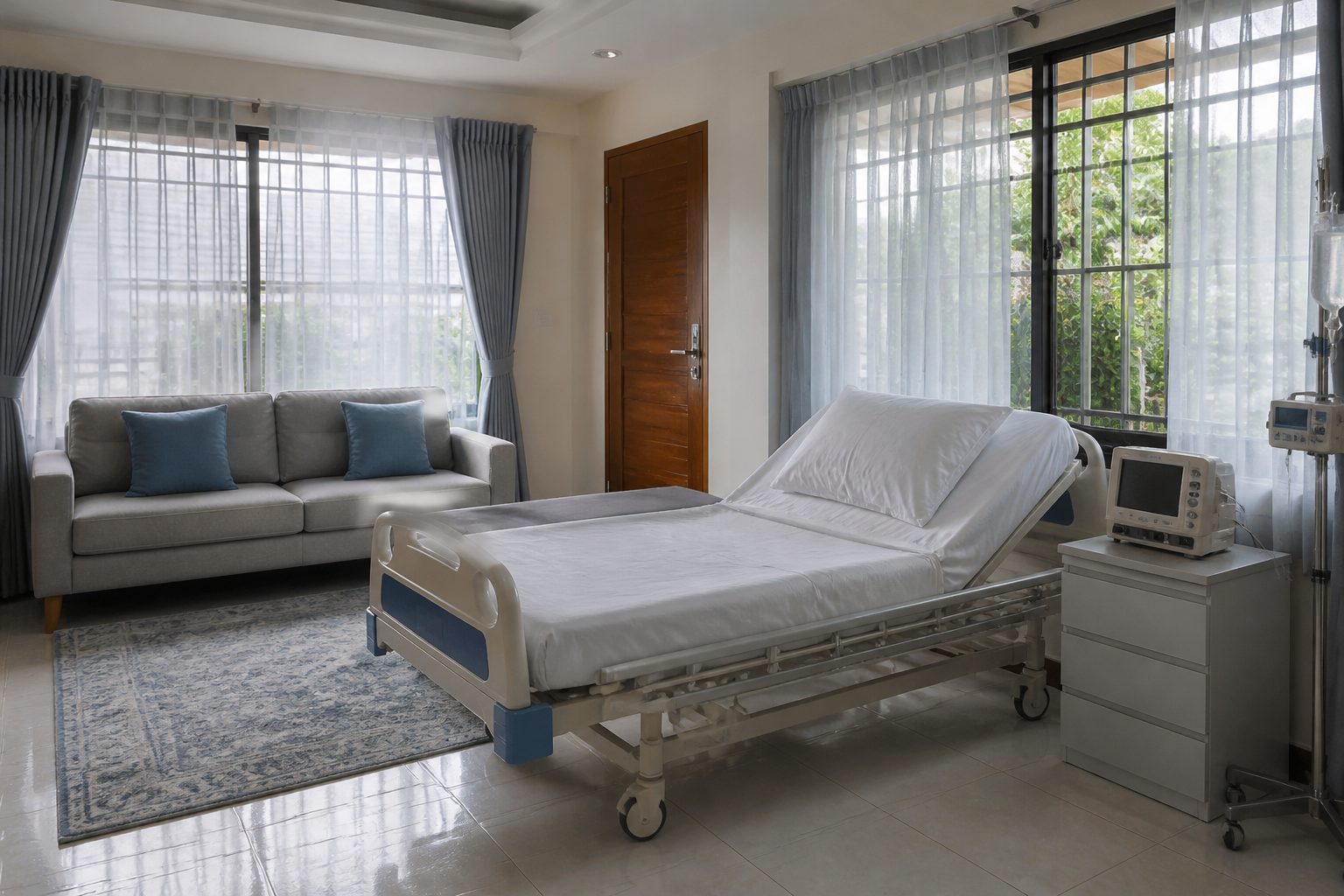
Home nursing in the Philippines costs from $380 to $1,100 (₱22,000–₱65,000) per month for basic elderly care or rehabilitation support. This guide details what is included, cost factors, and how prices compare to other countries.
This information is for families considering home-based nursing, physiotherapy, or elderly care in the Philippines. We explain pricing, what to expect, and how to evaluate options and save safely.
What is included in home nursing care?
Home nursing in the Philippines covers a range of services, from basic personal care to skilled medical support. Basic packages typically include assistance with daily living (bathing, feeding, mobility), medication reminders, basic wound care, and monitoring. More advanced care may cover post-operative support, physiotherapy, vital sign monitoring, injections, tube feeding, and palliative care. Some agencies offer live-in care, while others provide nurses or caregivers on a shift basis (8–12 hours per day).
Most providers supply registered nurses (RNs) for medical tasks and nursing aides or caregivers for non-medical support. The scope and intensity of services drive monthly costs. Agencies may also offer physiotherapists for rehabilitation or occupational therapists for stroke recovery, usually as add-on services charged per session.
Monthly home nursing costs in the Philippines
The monthly cost of home nursing in the Philippines varies significantly depending on several concrete factors. The most important considerations are the level of care required, the credentials of the nurse or caregiver, the number of hours per day or week, and the location of the patient’s residence. In Metro Manila and other large cities, a live-in caregiver providing basic support (such as help with bathing, feeding, and light housekeeping) typically starts at around $380 (₱22,000) per month. This price applies to caregivers or nursing aides with basic training, not licensed nurses.
If your loved one needs more advanced care—such as medication administration, wound care, or monitoring of chronic conditions—a registered nurse (RN) is required. For 24/7 live-in nursing by a licensed RN, monthly fees usually range from $650 to $1,100 (₱38,000–₱65,000), with higher rates for nurses with specialized experience (e.g., post-stroke rehabilitation, palliative care, or tracheostomy management). In provincial areas, rates may be 10–20% lower, but the availability of highly qualified nurses can be limited, and families may need to pay a premium for specialty care or to attract nurses willing to relocate.
Home care agencies in the Philippines often provide flexible packages to suit different needs and budgets:
- Part-time daily visits: Nurses or caregivers may visit for 3–4 hours per day, with rates starting around ₱8,000–₱15,000 per month. This is suitable for patients who need assistance with medication, bathing, or meal preparation but do not require round-the-clock supervision.
- Overnight shifts: For families who need support only during the night (for example, to monitor a patient’s sleep or provide toileting assistance), agencies may offer overnight packages at a reduced rate compared to 24/7 live-in care.
- Full-time live-in care: This option is best for patients needing continuous supervision, such as those with dementia, severe mobility issues, or complex medical needs. The cost is higher but may include some light housekeeping and meal preparation.
Keep in mind that additional costs for medical supplies, equipment rental, and specialized therapies are not included in the base monthly rate. It’s crucial to discuss your family member’s specific needs with the agency to receive an accurate quote and avoid hidden charges.
What is not included in the price?
While the quoted monthly home nursing fee in the Philippines covers the basic services of a nurse or caregiver, there are several important exclusions that families should be aware of before finalizing an agreement. Most notably, the cost typically does not include essential medical supplies such as catheters, adult diapers, gloves, syringes, wound dressings, and disposable underpads. These items are necessary for many patients—especially those with chronic illnesses or mobility issues—and must be purchased separately, often on a weekly or monthly basis. The expense for these consumables can add up quickly, sometimes reaching several thousand pesos per month depending on the patient’s condition.
- Prescription medications: Any medicines required for ongoing treatment, pain management, or chronic conditions are not covered by the nursing fee. Families need to budget separately for these, and costs can vary widely depending on the type and quantity of medication needed.
- Medical equipment rental: Items such as hospital beds, oxygen concentrators, nebulizers, suction machines, and mobility aids (wheelchairs, walkers) are usually rented or purchased separately. Rental fees for specialized equipment can range from ₱1,000 to ₱5,000 or more per month, depending on the device and location.
- Transportation costs: If the nurse or caregiver commutes to the patient’s home daily—especially in areas outside Metro Manila or in remote provinces—transportation allowances or reimbursements may be charged on top of the monthly fee. This can be a significant extra cost in regions with limited public transit.
- Specialized therapies and diagnostics: Services such as physiotherapy, occupational therapy, speech therapy, and laboratory tests (blood work, urinalysis) are generally billed per session or visit. Rates for these services vary but are rarely included in the standard home nursing package.
- Administrative or placement fees: Some agencies charge a one-time fee for processing paperwork, matching you with a nurse, or conducting initial assessments. This can range from a few hundred to several thousand pesos, depending on the agency’s policies.
It’s essential to request a detailed breakdown of what is and isn’t included before signing any contract. Ask for an itemized list of additional charges and clarify payment schedules for extra services. This proactive approach helps families avoid unexpected expenses and ensures that care remains within budget.
Cost comparison: home nursing and elderly care across countries
| Country | Monthly cost (basic care) | Monthly cost (RN/advanced care) | Single physio session | Notes |
|---|---|---|---|---|
| Philippines | $380–$650 (₱22,000–₱38,000) | $650–$1,100 (₱38,000–₱65,000) | $12–$30 (₱700–₱1,700) | Lower in provinces; 24/7 care costs more |
| India | $180–$400 (₹15,000–₹33,000) | $400–$900 (₹33,000–₹75,000) | $8–$20 (₹700–₹1,700) | Major cities higher; caregiver quality varies |
| Bangladesh | $100–$250 (৳11,000–৳28,000) | $250–$600 (৳28,000–৳68,000) | $7–$18 (৳800–৳2,000) | Urban/rural gap significant |
| Indonesia | $200–$450 (Rp3mn–Rp6.8mn) | $450–$850 (Rp6.8mn–Rp13mn) | $10–$22 (Rp160k–Rp350k) | Jakarta higher; limited English-speaking staff |
| Thailand | $400–$700 (฿14,000–฿25,000) | $700–$1,300 (฿25,000–฿46,000) | $18–$35 (฿650–฿1,300) | Bangkok highest; agencies well regulated |
| Malaysia | $420–$750 (RM2,000–RM3,600) | $750–$1,400 (RM3,600–RM6,700) | $15–$32 (RM70–RM150) | KL and Penang more expensive |
| United States | $4,800–$6,000 | $6,000–$10,000 | $120–$200 | Insurance may cover some costs |
| United Kingdom | $2,800–$4,000 (£2,200–£3,200) | $4,000–$7,500 (£3,200–£6,000) | $50–$100 (£40–£80) | NHS covers limited home care |
What drives the price of home nursing in the Philippines?
The cost of home nursing in the Philippines is influenced by a combination of practical and market-driven factors. The level of care required is the most significant determinant. Patients who need only basic assistance—such as help with personal hygiene, feeding, and mobility—can often be cared for by trained caregivers or nursing aides, whose rates are lower. However, if the patient requires skilled medical care, such as wound management, administration of injections, post-surgical monitoring, or complex medication regimens, only registered nurses (RNs) with clinical experience are qualified, and their services command higher fees.
Nurse qualifications play a direct role in pricing. Registered nurses, especially those with experience in specialized areas like palliative care, stroke rehabilitation, or ventilator management, are in higher demand and cost more than caregivers without a nursing license. Some families may even request nurses with international experience, further increasing costs.
The number of hours or shifts per day also impacts the total monthly fee. Full-time, live-in arrangements cost more due to the need for continuous coverage and the nurse’s on-site presence. Part-time or shift-based care is less expensive but may not be suitable for all patients, especially those with high-dependency needs.
Location is another important factor. Services in Metro Manila and other urban centers are generally more expensive due to higher living costs and greater demand. In provincial cities or rural areas, rates may be lower, but families might face limited choices and may need to pay extra for nurses willing to travel or relocate.
- Agency reputation: Well-established agencies with rigorous screening, training, and supervision of staff often charge premium rates for peace of mind and reliability.
- Additional services: If you require physiotherapy, occupational therapy, or regular laboratory testing, these are billed separately and can significantly increase monthly expenses.
- Urgency and contract length: Short-term contracts or urgent placements (for example, immediately after hospital discharge) may incur higher fees due to the logistics of rapid staffing.
Families should carefully assess their needs and discuss all potential cost drivers with prospective agencies. A clear understanding of what influences pricing helps in budgeting and ensures that you receive appropriate care for your loved one’s specific condition.
Types of home healthcare providers
In the Philippines, home care is delivered by a mix of hospital-based outreach programs, private agencies, freelance nurses, and rehabilitation clinics. Hospital-affiliated programs may offer higher clinical oversight and access to multidisciplinary teams (doctors, therapists), but are often more expensive. Private agencies range from large, accredited firms to small local operators, with varying levels of training and support for staff.
Freelance nurses may offer lower rates, but vetting and supervision are the responsibility of the family. Rehabilitation clinics provide home physiotherapy or occupational therapy, often as an add-on to nursing care. For complex cases (post-stroke, advanced dementia, palliative), families often combine nursing and therapy services for comprehensive support.
How to choose a reliable home nursing provider
Selecting a trustworthy home nursing provider in the Philippines involves several practical steps to ensure both quality of care and financial transparency. Begin by verifying that the agency is registered with the Department of Health (DOH) or the appropriate local government authority. This registration indicates compliance with national healthcare standards and basic legal requirements. Many reputable agencies also belong to professional associations, which can be an added assurance of quality.
- Screening and training: Ask if the agency conducts thorough background checks, including police clearances and employment history verification. Ongoing staff training, especially in infection control, emergency response, and patient safety, is a strong indicator of a reliable provider.
- Nurse qualifications: Clarify whether the assigned staff are registered nurses (RNs), licensed practical nurses (LPNs), or caregivers/nursing aides. For complex medical needs, insist on RNs with experience relevant to your loved one’s condition (e.g., stroke care, dementia, post-surgery recovery).
- Supervision and support: Reliable agencies provide regular supervision of their staff, either through scheduled visits or remote check-ins. Ask how often supervisors review care plans and evaluate staff performance.
- References and reviews: Request contact details for previous clients or read online reviews. Positive feedback from other families is a strong endorsement of the agency’s reliability and professionalism.
- Emergency protocols: Inquire about the agency’s procedures for medical emergencies, staff absences, or unexpected changes in care needs. A dependable provider will have clear backup arrangements and 24/7 support lines.
- Transparent contracts: Demand a detailed contract outlining all included services, extra charges, payment schedules, and terms for contract termination or changes. Avoid agencies that are vague about costs or reluctant to provide written agreements.
Finally, make sure the agency has a clear process for handling complaints or feedback. Open communication and prompt resolution of issues are hallmarks of a professional provider. Taking these steps will help you find a home nursing service that is both competent and trustworthy, ensuring the safety and well-being of your loved one.
How to save safely on home nursing costs
Families can reduce costs by limiting care hours to peak needs (e.g., mornings and evenings), hiring caregivers for non-medical tasks, and reserving registered nurses for complex care. Some opt for a mix of family-provided support with part-time professional help. Comparing rates from multiple agencies, negotiating for longer-term contracts, and asking about bundled packages (nursing plus therapy) can also yield savings.
However, avoid hiring unlicensed or untrained personnel for medical tasks, as this risks safety. Always verify credentials and ensure the provider has liability insurance and emergency protocols. If you need equipment, consider renting rather than buying. Check if private health insurance covers any home care expenses—some plans offer limited benefits.
Planning tips: what to ask and how to prepare
Proper planning is crucial when hiring a home nurse or caregiver in the Philippines. Begin by making a comprehensive assessment of your family member’s needs. List all medical requirements (such as medication schedules, wound care, or feeding tubes), daily routines (bathing, dressing, meals), level of mobility, and any therapies or special assistance required (like physiotherapy or speech therapy).
- Questions for agencies: Ask about staff schedules and how they handle shift changes or unexpected absences. Inquire about the process for matching caregivers to clients—do they consider language, personality, and experience with specific conditions? Request details on communication protocols: how will the agency update you on your loved one’s condition, and how can you reach them in case of emergencies?
- Backup and emergency plans: Find out what happens if your assigned nurse is suddenly unavailable. Reliable agencies have backup staff and clear procedures for urgent situations.
- Home preparation: Ensure your home is safe and accessible. This may include installing grab bars in bathrooms, clearing walkways of obstacles, providing a comfortable and adjustable bed, and ensuring adequate lighting. If medical equipment is needed, coordinate with suppliers for timely delivery and installation.
- Documentation: Keep all relevant medical records, prescriptions, and emergency contact numbers readily available. Create a folder or digital file that the nurse can easily access in case of need.
- Ongoing monitoring: Schedule regular meetings with the agency to review the quality of care, discuss any changes in your loved one’s health, and adjust care plans as needed. Open communication helps address concerns early and maintains a high standard of care.
By taking these steps, you can avoid misunderstandings, prevent gaps in care, and ensure a safe, comfortable environment for your family member. Thoughtful preparation also makes it easier for the nurse or caregiver to provide the best possible support from day one.
Frequently asked questions
How do I know if I need a registered nurse or a caregiver?
If your family member needs medical care (wound dressing, injections, tube feeding), a registered nurse is necessary. For basic support with daily activities, a trained caregiver or nursing aide is sufficient. Assess the patient’s condition with your doctor before choosing.
Are home nursing agencies in the Philippines regulated?
Many agencies are registered with the Department of Health, but not all. Always ask for proof of registration and check if staff have valid licenses. Larger agencies may also have additional accreditations or partnerships with hospitals.
Can I hire a home nurse directly instead of through an agency?
Yes, but you assume responsibility for vetting, contracts, and supervision. Agencies offer more support and backup arrangements, but direct hiring may be cheaper. Ensure any nurse or caregiver is properly licensed and experienced for the required care.
Is home nursing covered by insurance in the Philippines?
Most government and basic private health insurance plans do not cover home nursing. Some premium private insurance policies may reimburse part of the cost for skilled nursing or therapy. Check your plan details and ask providers about payment options.
What happens if my usual nurse is unavailable?
Reputable agencies have backup staff and will arrange a replacement if your regular nurse is sick or on leave. If you hire directly, you must find your own substitute. Always clarify backup arrangements before starting care.
Related guides
Disclaimer: Prices and services described above are indicative and may vary by provider, region, and patient needs. Always obtain a written quote and consult a qualified doctor to assess care requirements before making decisions.